School Shoes for Long Hours: Fit, Comfort & Buying Guide
Liberty Boys School Uniform Shoe
Buy
Liberty School Uniform Shoe
Buy
Velcro School Shoes – EVA Sole
Buy
Invixo School Gola Uniform Shoes
Buy
Uniform School Shoes for Kids
Buy
INVIXO Uniform Monk Strap Shoes
Buy
Uniform Black School Shoes
Buy
Men’s Oxford Uniform Dress Shoe
Buy

School Shoes for Long Hours: The Complete Comfort Guide for Indian Students

School shoes for long hours are not just part of the uniform — they are the only footwear a student wears for 6–8 hours every day. From the morning walk or bus ride, through long assemblies, classroom standing, corridor walking, stairs, and playground time, the wrong pair causes fatigue, poor posture, and loss of concentration by the afternoon. This guide explains exactly what features matter for all-day comfort in Indian school conditions, how to choose the right fit for growing feet, and how to keep shoes performing for a full academic year.

Understanding a Student’s Everyday Routine

A typical Indian school day puts continuous stress on a child’s feet. Most students experience this sequence:
  • Morning commute – walking or standing in bus/auto for 20–45 minutes
  • Assembly – 15–30 minutes of standing on hard ground or tiled floors
  • Classroom hours – long sitting mixed with frequent standing and short walks between periods
  • Stairs and corridors – repeated climbing and quick movement
  • Breaks and PT – running, playing, sudden stops on playground or cemented surfaces
  • Return journey – tired feet carrying the full day’s impact
By the last period, poorly designed shoes have already transferred strain to heels, arches, knees, and lower back. Choosing school shoes built for long hours directly affects energy, posture, and classroom focus.

Why Comfort Matters More Than Style

While a neat appearance is important for school uniform rules, comfort must come first. Cushioned soles absorb repeated impact from hard floors and playgrounds. Flexible construction allows natural foot movement. Breathable materials reduce heat and moisture buildup during long Indian school days. Comfortable school shoes for long hours lower stress on growing feet and help students stay attentive instead of distracted by foot pain or fatigue.

Durability for Daily School Life

School shoes face rough daily use — playground surfaces, tiled corridors, stairs, and occasional wet conditions. Strong stitching, quality soles, and well-finished uppers help the shoes hold their shape and support for a full academic year. Durable footwear reduces the need for frequent replacements and keeps comfort consistent from the first term to the last. For parents looking for reliable daily options, explore our collection of best school shoes for boys designed for comfort, durability, and long hours of school use.

The Importance of Proper Fit for Growing Feet

Children’s feet grow quickly, so proper fit is essential for long-hour wear. The shoe should offer a small amount of growing room (roughly the width of an adult thumb) at the toe without being loose at the heel. Tight shoes cause blisters and restricted movement. Oversized shoes reduce stability and can lead to tripping or poor posture. Checking fit every few months and replacing shoes when the cushioning compresses or the toe space disappears helps protect foot health throughout the school year.

Leather and High-Quality Materials for Long School Hours

Leather and good-quality synthetic alternatives are popular for school use because they balance breathability, durability, and a neat uniform look. Well-made options such as black uniform shoes combine support with a clean appearance that meets most school dress codes while remaining suitable for long and demanding school days.

Safety and Support Throughout the Day

Good school shoes for long hours should provide reliable grip to prevent slips on polished floors and wet surfaces, along with proper heel and arch support. Stable footwear helps students walk, climb stairs, and move between classes with confidence and less strain on joints.

Simple Habits to Make School Shoes Last Longer

Allowing shoes to dry fully after use, wiping them regularly, and storing them in a well-ventilated place extends their life. Rotating between two pairs when possible and avoiding direct heat (radiators or strong sunlight) helps preserve both cushioning and structure across the academic year. Students who must follow strict dress codes can also choose from our range of uniform shoes black that combine a neat appearance with all-day comfort. From the morning bell to the last period, the right pair of school shoes for long hours quietly supports every step a student takes. Choosing comfortable, durable, and well-fitted footwear is a small decision that makes a meaningful difference in daily energy, posture, and focus.

Key Features to Look for in School Shoes for Long Hours

Not every school shoe is designed for 6–8 hours of continuous wear. When choosing footwear for long school days in India, prioritise these features:
  • Cushioned insole – absorbs impact from hard floors, stairs, and playground surfaces
  • Flexible sole – bends naturally at the ball of the foot for comfortable walking
  • Breathable upper and lining – reduces heat and moisture buildup in warm weather
  • Secure heel support – prevents the foot from slipping inside the shoe
  • Reliable grip – slip-resistant outsole for tiled corridors and wet surfaces
  • Lightweight construction – reduces leg fatigue by the end of the day
  • Proper fit with slight growth room – supports healthy foot development

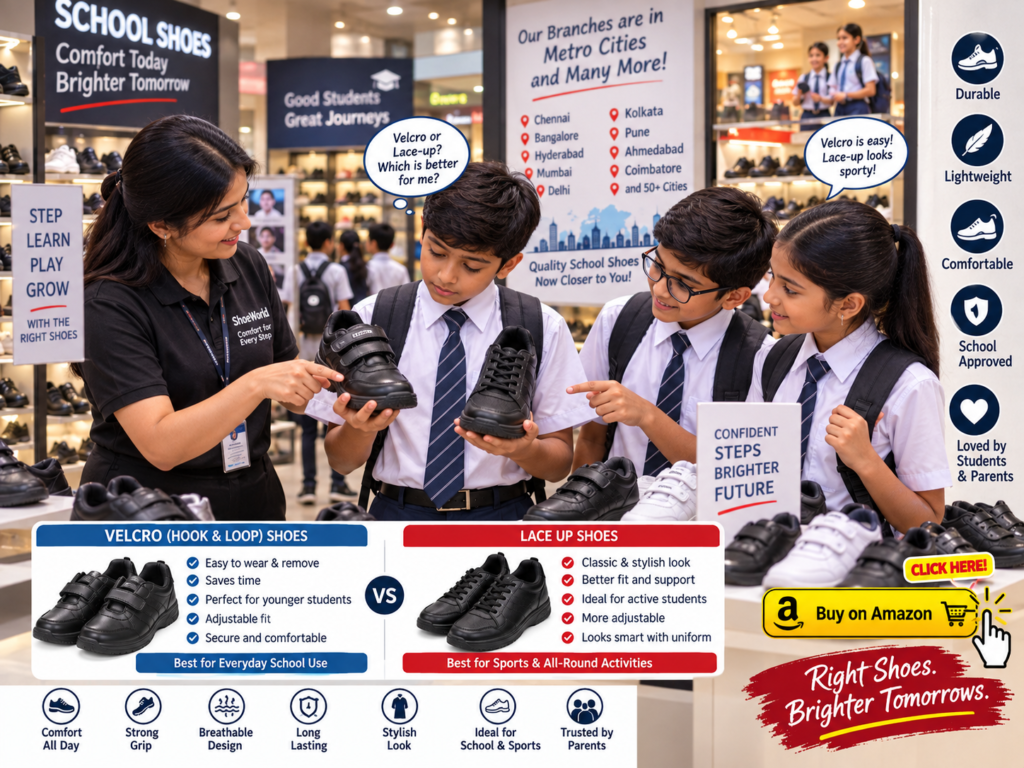
Velcro vs Lace-Up School Shoes: Which Is Better for Long Hours?

Both closure types work well for school use, but they suit different age groups and needs.
Feature Velcro Shoes Lace-Up Shoes
Ease of use Very quick – ideal for younger children Takes more time and practice
Fit adjustment Moderate – fixed strap positions High – can be tightened precisely
Best for Kids under 9–10 years, early primary classes Older students, middle and senior classes
Stability Good for daily school wear Excellent lockdown for active days
Durability of closure Can collect lint and lose grip over time Laces are easy to replace
For most primary students, Velcro offers convenience and independence. For older students who need a more secure fit during long hours of walking and activity, lace-up styles usually perform better.

Benefits of Cushioned Soles for Students

Cushioned soles play a major role in making school shoes comfortable for long hours:
  • Impact absorption – reduces stress on heels and joints during walking, standing, and playing
  • Better pressure distribution – spreads body weight more evenly across the foot
  • Reduced fatigue – helps students stay energetic and focused till the last period
  • Support for growing feet – lowers the risk of discomfort and early foot strain
Shoes with good cushioning are especially useful for children who walk long distances to school or spend extended time on hard classroom and corridor floors.

Frequently Asked Questions – School Shoes for Long Hours

1. Why are school shoes important for long hours? Students spend most of the day on their feet. Proper school shoes for long hours reduce foot strain, support posture, and help maintain comfort and concentration from morning till the last period. 2. What features should parents look for? Look for cushioning, flexibility, breathability, secure fit, good grip, and lightweight construction. These features matter more than brand name alone for daily school wear. 3. Are leather shoes suitable for everyday school use? Yes. Good-quality leather or high-grade synthetic alternatives offer breathability, durability, and a neat uniform appearance, making them suitable for long school days. 4. How often should school shoes be replaced? Replace them when the cushioning becomes flat, the sole loses grip, the upper cracks, or the child’s toes reach the front of the shoe. Growing children may need new pairs once or twice in an academic year. 5. Can uncomfortable shoes affect a student’s performance? Yes. Foot pain and fatigue can reduce concentration, lower energy levels, and make students restless during long classroom hours. 6. How much growing room should I leave? Leave about the width of an adult thumb (roughly 1–1.5 cm) between the longest toe and the front of the shoe. Avoid buying shoes that are much larger “to grow into,” as they reduce stability.

Velcro vs Lace-Up School Shoes: Which Is Better for Long Hours?

Both closure types work well for school use, but they suit different age groups and needs during long school days.

FeatureVelcro ShoesLace-Up Shoes
Speed & ConvenienceVery high – fast to wear and removeLower – requires tying
Fit CustomizationModerate – fixed strap positionsHigh – adjustable across the foot
Best ForYounger children (under 9–10 years), primary classesOlder students, middle & senior classes
Stability for Long HoursGood for daily school wearExcellent lockdown and support
Long-Term DurabilityHook-and-loop can wear or collect lint over timeHigh – laces are easy to replace

For most primary students, Velcro offers convenience and independence. For older students who need a more secure fit during long hours of walking and activity, lace-up styles usually perform better.

Benefits of Cushioned Soles for Students

Cushioned soles play a major role in making school shoes comfortable for long hours:

  • Impact absorption – reduces stress on heels and joints during walking, standing, and playing
  • Better pressure distribution – spreads body weight more evenly across the foot
  • Reduced fatigue – helps students stay energetic and focused till the last period
  • Support for growing feet – lowers the risk of discomfort and early foot strain

Shoes with good cushioning are especially useful for children who walk long distances to school or spend extended time on hard classroom and corridor floors.

Explore Related Guides

Why School Shoes for Long Hours Are Important

Students spend most of their day on their feet — walking corridors, standing during assemblies, climbing stairs, and moving between classes. The right pair of school shoes for long hours reduces fatigue, supports healthy posture, and helps children stay focused till the last period. Poor footwear, on the other hand, can cause foot strain, discomfort, and loss of concentration by the afternoon.

Key Reasons Proper School Shoes Matter

  • All-Day Comfort and Support: Cushioned soles absorb impact and reduce foot strain during long hours of standing and walking, helping students maintain posture and concentration.
  • Durability for Daily Wear: Strong stitching and quality materials withstand playground surfaces, tiled floors, and daily use throughout the academic year.
  • Proper Fit for Growing Feet: Adequate toe room without excess looseness prevents blisters, imbalance, and long-term foot issues.
  • Breathable Materials: Good-quality leather or synthetic uppers with breathable linings keep feet cooler and more comfortable in warm Indian school conditions.
  • Safety and Stability: Reliable grip and solid heel support help students walk, climb stairs, and move confidently without unnecessary strain or risk of slipping.

Benefits of Cushioned Soles for Students

  • Impact Absorption: Cushioned soles reduce the stress on heels and joints as students walk corridors, stand during assemblies, and move between classrooms throughout the day.
  • Better Pressure Distribution: Good cushioning spreads body weight more evenly across the foot, which lowers discomfort during long hours of wear.
  • Reduced Fatigue: By absorbing repeated impact, cushioned soles help students stay more energetic and focused till the last period.
  • Support for Growing Feet: Proper cushioning supports healthy movement and lowers the risk of early foot strain in children who spend 6–8 hours in school shoes every day.

For parents looking for daily uniforms that also fit long hours, check the uniform shoes black designed for comfort and everyday school use.

Frequently Asked Questions – School Shoes for Long Hours

1. Why are school shoes important for long hours?
Students spend most of the day walking, standing, and moving between classes. Proper school shoes for long hours reduce foot strain, support good posture, and help maintain comfort and concentration from the morning assembly to the last period.

2. What features should parents look for in school shoes?
Look for cushioned insoles, flexible soles, breathable materials, secure heel support, reliable grip, and a proper fit with slight growing room. These features matter more than brand name alone for daily school wear.

3. Are leather shoes suitable for everyday school use?
Yes. Good-quality leather or high-grade synthetic alternatives offer breathability, durability, and a neat uniform appearance, making them suitable for long school days. For students who need a traditional school-uniform style, see our guide to black uniform shoes.
Yes. Good-quality leather or high-grade synthetic alternatives offer breathability, durability, and a neat uniform appearance, making them suitable for long school days in Indian conditions.

4. How often should school shoes be replaced?
Replace them when the cushioning becomes flat, the sole loses grip, the upper starts cracking, or the child’s toes reach the front of the shoe. Growing children may need new pairs once or twice during an academic year.

5. Can uncomfortable shoes affect a student’s performance?
Yes. Foot pain and fatigue can reduce concentration, lower energy levels, and make students restless or distracted during long classroom hours.

6. How much growing room should I leave when buying school shoes?
Leave about the width of an adult thumb (roughly 1–1.5 cm) between the longest toe and the front of the shoe. Avoid buying shoes that are much larger “to grow into,” as oversized shoes reduce stability and can cause blisters or poor balance.
Explore quality options in our best school shoe guide for boys.